Best Software for E-commerce Business

The right technology stack is crucial for e-commerce success, often more important than products or pricing alone. E-commerce businesses need integrated software to manage inventory, track customer interactions, automate marketing, and analyze data across multiple channels.
From comprehensive CRM systems that help nurture customer relationships to robust content management systems that power your storefront, from sophisticated inventory management solutions to cutting-edge marketing and analytics tools — each piece of software in your tech stack should complement the others to create a cohesive ecosystem that drives your business forward.
Choosing complementary tools — from CRM and content management to inventory and analytics solutions — creates a cohesive ecosystem that drives business growth. This guide will explore essential e-commerce software categories and top options for businesses of all sizes, helping you build an optimal foundation for your online store
What Makes Software Ideal for E-Commerce?
Before diving into specific solutions, it’s important to understand the criteria that truly matter when evaluating software for your e-commerce business. The digital landscape is crowded with options, but not all are created equal, especially when it comes to the unique demands of online retail.
Scalability & Integrations
E-commerce businesses rarely stay the same size for long — they either grow or fade away. The software you choose today should be able to handle your business at 10x or even 100x its current volume without requiring a complete system overhaul.
Key considerations include:
- Can the platform handle rapid increases in product catalog size?
- Does it maintain performance during seasonal traffic spikes?
- Will it support multiple currencies, languages, and regional tax requirements as you expand?
Even more crucial is how well your tools connect with each other. The most powerful e-commerce software ecosystem is one where data flows seamlessly between platforms. Look for tools with robust API capabilities and pre-built integrations with other solutions in your stack. When your inventory system automatically updates your online store, which triggers your fulfillment process and updates your CRM — that’s when true operational efficiency begins.
Automation & Efficiency
Manual processes are the enemy of scalability in e-commerce. Every repeated task that can be automated represents time and resources that could be better invested elsewhere in your business.
The best e-commerce software solutions offer automation for:
- Order processing workflows.
- Inventory updates and reorder notifications.
- Customer segmentation and personalized marketing.
- Abandoned cart recovery.
- Customer support ticket routing.
- Financial reconciliation and reporting.
When evaluating software, look beyond flashy features to understand how much actual time and human effort it will save your team. Sometimes, a simpler solution with better automation capabilities delivers more value than a feature-rich platform that requires constant manual intervention.
UX/UI & Learning Curve
E-commerce moves quickly, and your team needs tools they can master rapidly. Software with an intuitive interface and logical workflow design will lead to faster adoption, fewer errors, and more consistent use across your organization.
Consider:
- How quickly can new team members become productive with the system?
- Does the interface guide users through complex processes?
- Are common tasks accessible without excessive clicking?
- Is the design modern and responsive across devices?
Remember that the best user experience isn’t necessarily the flashiest — it’s the one that feels invisible because it so naturally supports your team’s workflow without getting in the way.
Reporting & Analytics
Data-driven decision making is no longer optional in e-commerce — it’s a requirement for staying competitive. Your software stack should provide clear visibility into all aspects of your business performance.
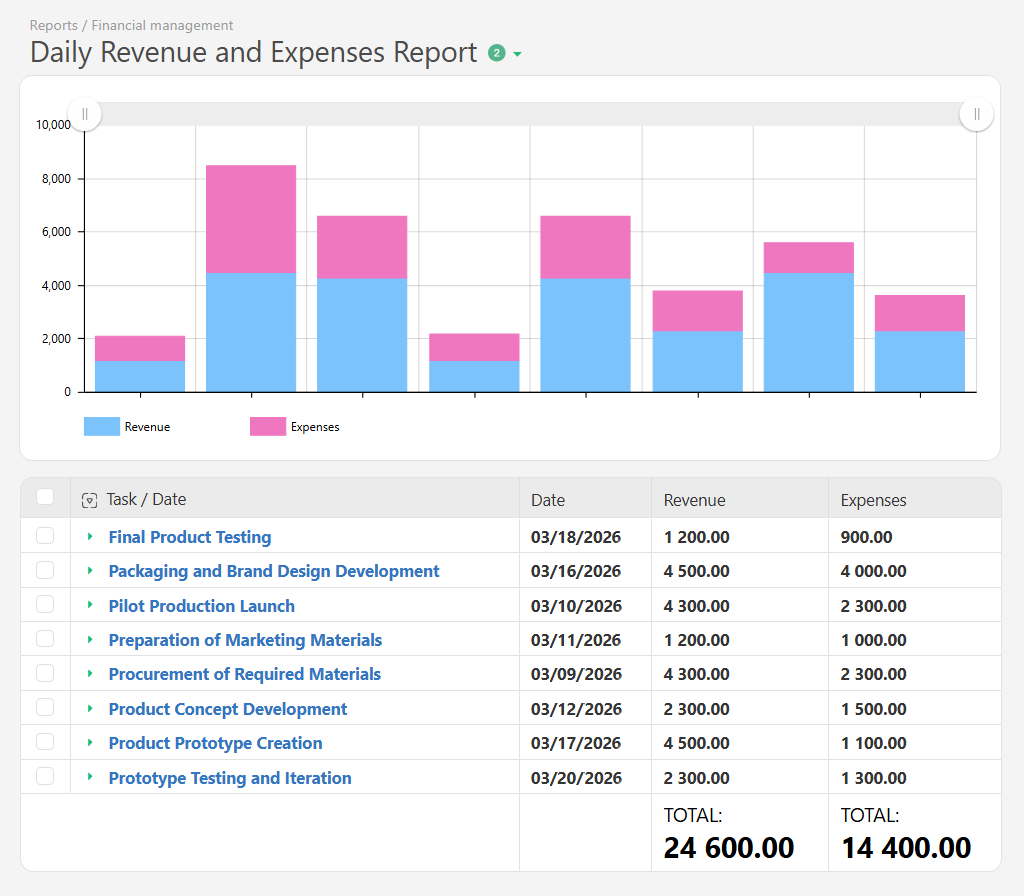
Effective e-commerce analytics should:
- Connect marketing spend to actual sales
- Track customer lifetime value across channels
- Reveal inventory performance and forecasting data
- Monitor operational efficiency metrics
- Provide customizable dashboards for different roles
The most valuable analytics tools don’t just present data — they surface actionable insights that help you identify opportunities and address problems before they impact your bottom line.
Support & Customization
No software solution will perfectly match your business needs out of the box. The ability to customize workflows, fields, and processes to reflect your unique operations can transform a good tool into a great one.
Additionally, even the best software occasionally requires support. Evaluate:
- The availability of technical assistance across your working hours
- The quality of documentation and self-service resources
- The vendor’s track record for resolving issues
- The existence of an active user community or forum
Now that we’ve established what makes e-commerce software truly valuable, let’s examine some of the top solutions across various categories that can help power your online business.
Top Software Solutions for E-commerce Business
Planfix
Type: Business automation & CRM
Source: https://planfix.com/
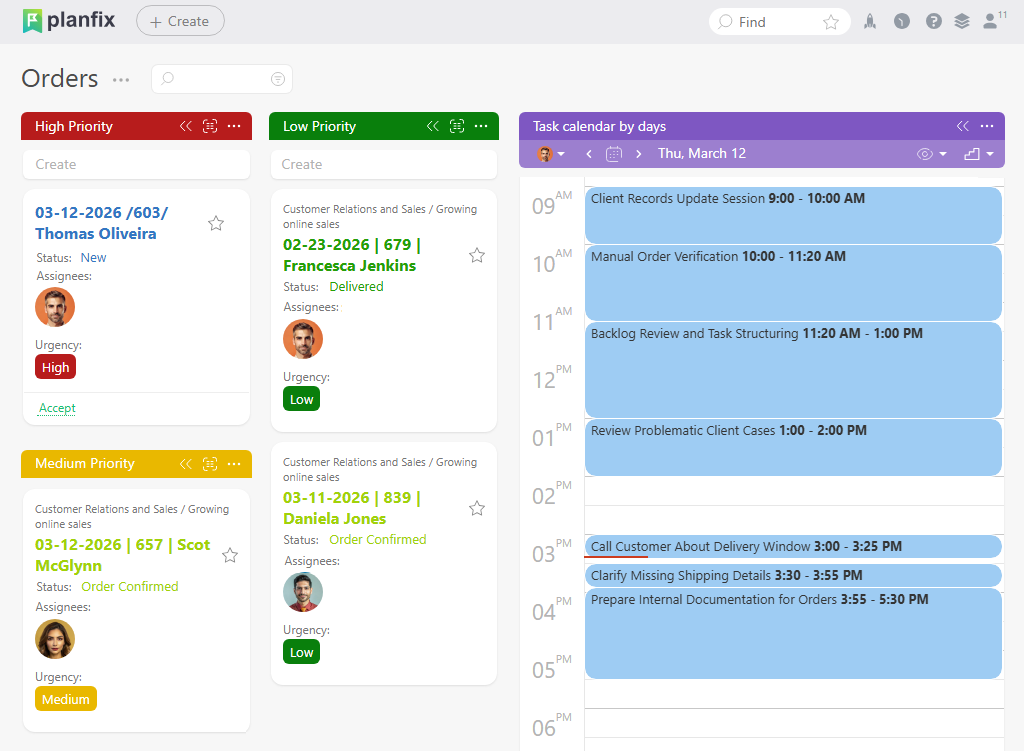
Why use it: Planfix stands out as a comprehensive solution that unifies multiple critical aspects of e-commerce operations. Unlike single-purpose tools, Planfix creates a central command center where tasks, communications, client information, and process automation all live together in perfect harmony. This unified approach eliminates the fragmentation that often plagues e-commerce businesses, allowing teams to control operations from a single, customizable dashboard.
Key features:
- Custom CRM pipelines for sales that adapt to your specific business processes
- Workflow automation that reduces manual tasks and ensures consistency
- Seamless integration with popular marketplaces, 1C accounting, and various CMS platforms
- Detailed order tracking and collaborative task management across departments
- Comprehensive budget and cost control tools for financial oversight
What makes Planfix particularly valuable for e-commerce businesses is its flexibility. While many platforms force you to adapt your processes to their system, Planfix allows you to design workflows that mirror your actual business operations. This means your software works the way you do, not the other way around.
The platform’s ability to connect with marketplace APIs means order information flows automatically into your system, triggering appropriate tasks and notifications without manual data entry. For businesses managing hundreds of orders across multiple channels, this integration capability alone can save countless hours of administrative work.
Free trial: Yes
Best for: E-commerce businesses seeking end-to-end customization in workflows and data management, particularly those with complex processes spanning multiple departments or channels.
Shopify
Type: E-commerce platform (CMS + tools)
Source: https://www.shopify.com/
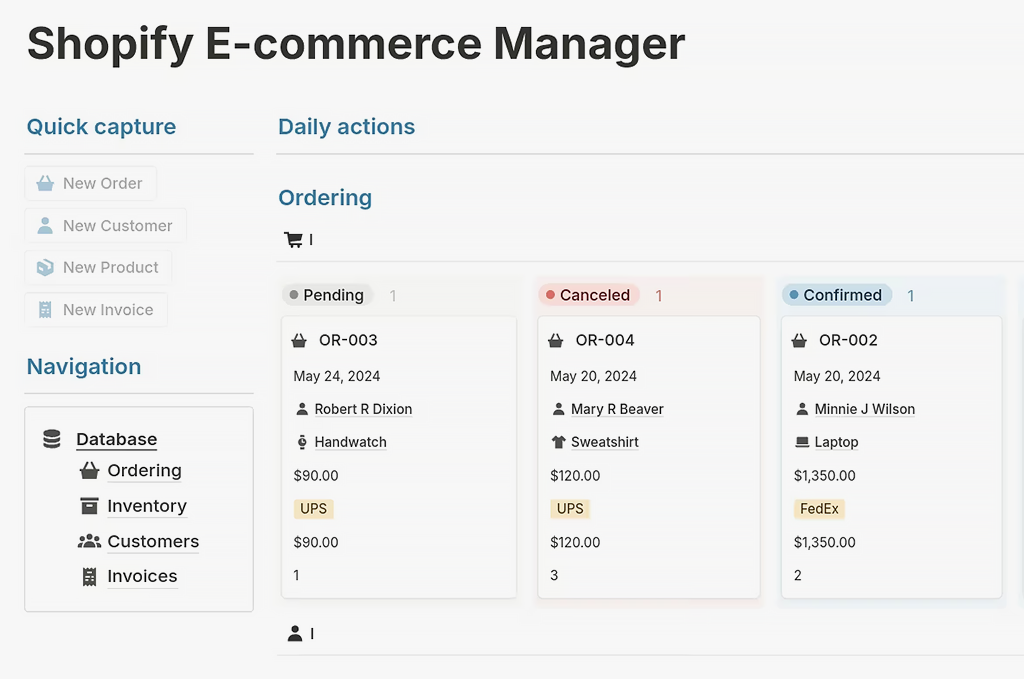
Why use it: Shopify has revolutionized e-commerce by providing a truly comprehensive solution for creating and managing online stores. Its strength lies in minimizing technical barriers while maximizing functionality, allowing merchants to focus on their products and customers rather than website infrastructure.
Key features:
- Intuitive store builder with drag-and-drop editor requiring minimal technical knowledge
- Robust inventory and order management systems built specifically for online retail
- Integrated POS system bridging the gap between online and offline sales
- Built-in SEO tools and marketing features to drive traffic and conversions
- Extensive plugin marketplace with thousands of apps for enhanced functionality
Shopify’s ecosystem approach means most e-commerce functions are either built-in or available through their app store. This creates a cohesive environment where all components work together reliably. Their payment processing is particularly seamless, with abandoned cart recovery, multi-currency support, and fraud analysis integrated directly into the platform.
For businesses without dedicated development resources, Shopify’s template-based approach and visual editors remove major technical hurdles without sacrificing professional design. The platform also scales effectively, with enterprise-grade hosting and performance optimization built into the service.
Free trial: Yes
Best for: Small to medium businesses looking to launch online retail operations quickly with minimal technical overhead. Especially valuable for merchants who want to focus on product and marketing rather than website development and infrastructure.
HubSpot
Type: CRM & marketing automation
Source: https://www.hubspot.com/
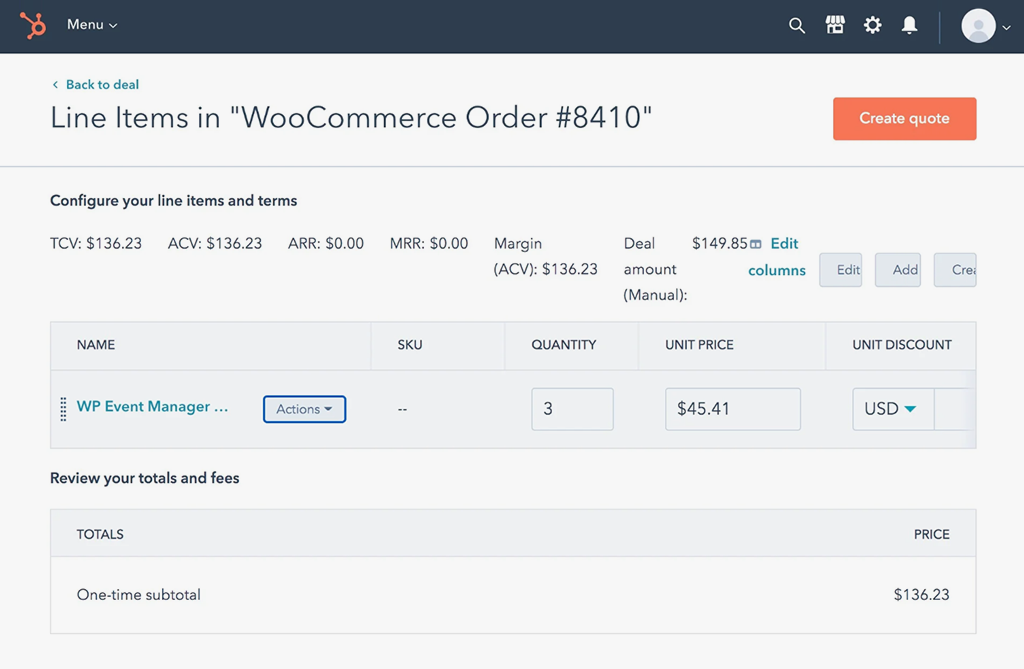
Why use it: HubSpot takes a holistic approach to customer relationship management that perfectly aligns with the customer-centric nature of successful e-commerce. The platform supports complete customer lifecycle management with integrated tools for marketing, sales, and customer service.
Key features:
- Sophisticated marketing automation workflows triggered by customer behavior
- Visual sales pipelines that track prospects through the buying journey
- Integrated live chat and AI-powered chatbot capabilities for real-time customer engagement
- Native integration with e-commerce platforms like Shopify and WooCommerce
- Advanced analytics that connect marketing activities to revenue outcomes
What separates HubSpot from traditional CRM systems is its inbound methodology, which focuses on attracting customers through valuable content and experiences rather than interruption-based marketing. For e-commerce businesses, this approach helps build sustainable traffic and loyalty in an increasingly competitive online marketplace.
HubSpot’s e-commerce integrations automatically sync customer purchase data with contact records, enabling highly targeted marketing based on actual buying behavior. This connection between marketing activities and sales outcomes creates a closed-loop reporting system that helps optimize your customer acquisition strategy.
Free trial: Yes (with limited features in the free version)
Best for: E-commerce businesses focused on scaling their marketing operations and customer engagement through data-driven approaches. Particularly valuable for companies with longer consideration cycles or those selling higher-value products where relationship nurturing matters.
Zoho Inventory
Type: Inventory & order management
Source: https://www.zoho.com/inventory/
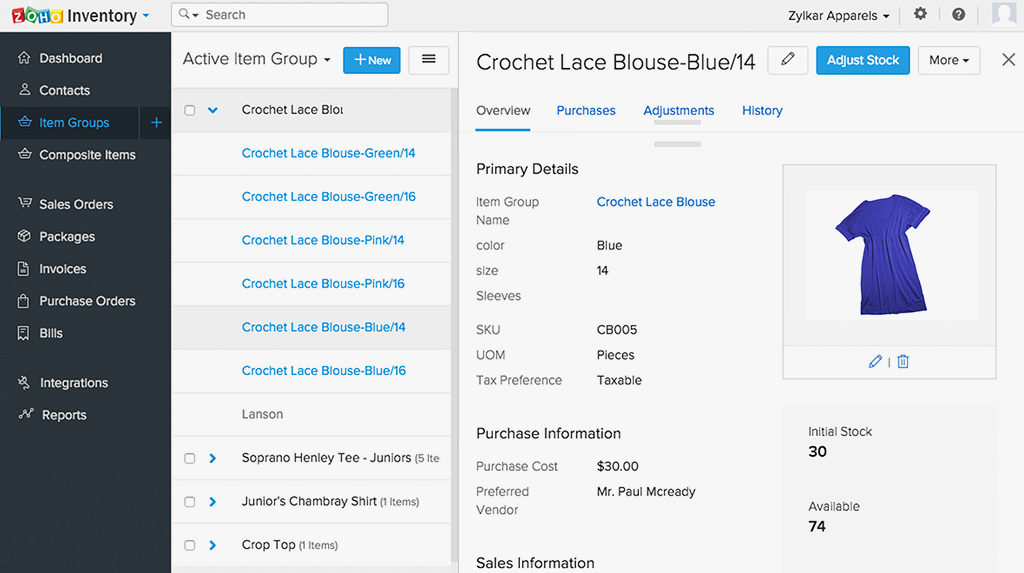
Why use it: For e-commerce businesses, inventory management often becomes increasingly complex as they scale, especially when selling across multiple channels or from multiple locations. Zoho Inventory addresses these challenges with purpose-built tools designed specifically for multi-channel online retail.
Key features:
- Comprehensive multi-warehouse support for businesses with distributed inventory
- Integrated barcode scanning for efficient receiving and fulfillment processes
- End-to-end order tracking from placement through fulfillment and delivery
- Direct integration with major marketplaces, including Amazon, eBay, and Shopify
- Seamless financial synchronization with Zoho Books for accounting accuracy
The strength of Zoho Inventory lies in its ability to centralize inventory data across sales channels. When a customer purchases a product on your website, Amazon store, or any connected marketplace, inventory levels update automatically across all platforms, preventing the costly and reputation-damaging mistake of overselling.
For growing e-commerce operations, the platform’s order management workflow tools help standardize processes like dropshipping, back-ordering, and partial fulfillment. This systemization becomes increasingly valuable as order volume grows and fulfillment processes become more complex.
Free trial: Yes
Best for: E-commerce businesses managing wide product catalogs across multiple sales channels, particularly those with multiple warehouses or complex fulfillment workflows.
Mailchimp
Type: Email & marketing platform
Source: https://mailchimp.com/
Why use it: Email marketing consistently delivers one of the highest ROIs for e-commerce businesses, and Mailchimp has evolved from a simple email service provider to a comprehensive marketing platform specifically optimized for online sellers.
Key features:
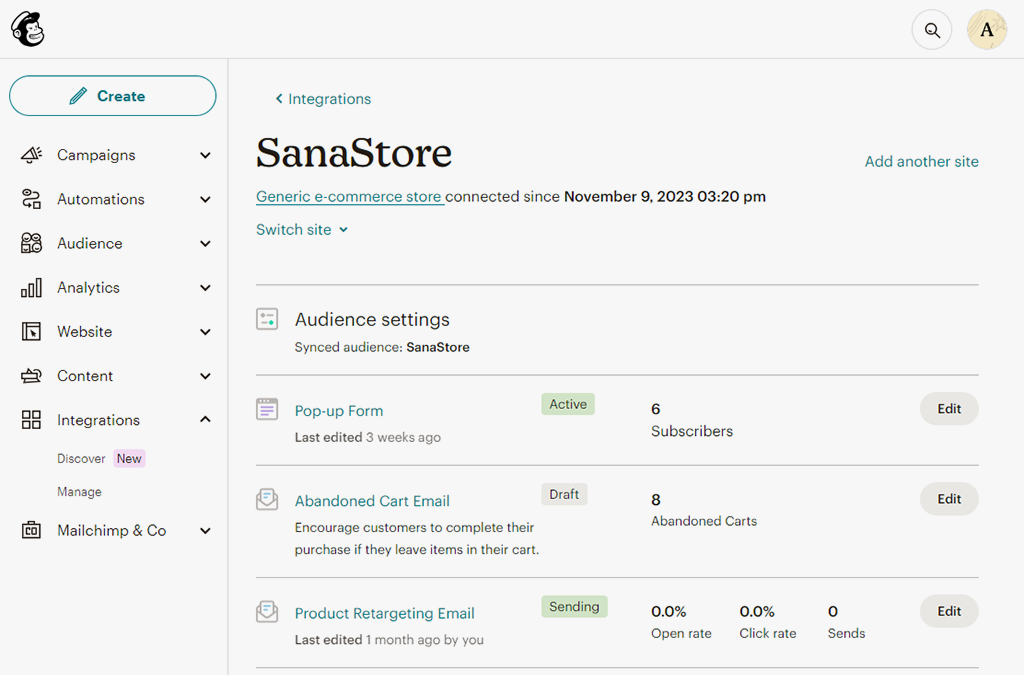
- Intuitive email automation workflows for abandoned carts, post-purchase follow-ups, and more
- Product recommendation blocks that dynamically display relevant items based on customer behavior
- Deep e-commerce integrations that sync customer purchase history and product data
- Clear analytics dashboards showing campaign performance and revenue attribution
- Expanded channels, including SMS marketing and push notification options
Mailchimp’s strength for e-commerce comes from its understanding of the customer journey. The platform makes it remarkably easy to create triggered email sequences based on specific shopper actions — from browse abandonment to post-purchase follow-ups — without requiring technical expertise.
The platform’s segmentation capabilities allow for highly targeted messaging based on purchase history, browsing behavior, and customer lifecycle stage. This personalization capability transforms email from a broadcast medium to a conversion-focused tool that drives repeat purchases and higher lifetime value.
Free trial: Yes
Best for: E-commerce businesses focused on building their brand and driving customer retention through email marketing. Particularly valuable for merchants with frequent purchase cycles where regular customer communication drives increased sales.
Klaviyo
Type: Advanced email & SMS marketing for e-commerce
Source: https://www.klaviyo.com/
Why use it: While Mailchimp excels as a general-purpose email platform, Klaviyo was built exclusively for e-commerce with advanced capabilities tailored to the unique needs of online retailers. Its sophisticated segmentation and predictive tools take email marketing to a more data-driven level.
Key features:
- Exceptionally deep integration with e-commerce platforms like Shopify and WooCommerce
- Predictive analytics that identify customers likely to purchase or churn
- Dynamic product feeds in emails that update based on inventory and customer behavior
- Detailed revenue attribution showing exact ROI for every campaign and flow
- Advanced A/B testing capabilities for optimizing message performance
What truly distinguishes Klaviyo is its e-commerce DNA. The platform automatically calculates metrics like predicted customer lifetime value, churn risk, and optimal send time based on your actual store data. These insights enable precision targeting that goes beyond basic segmentation to predictive marketing.
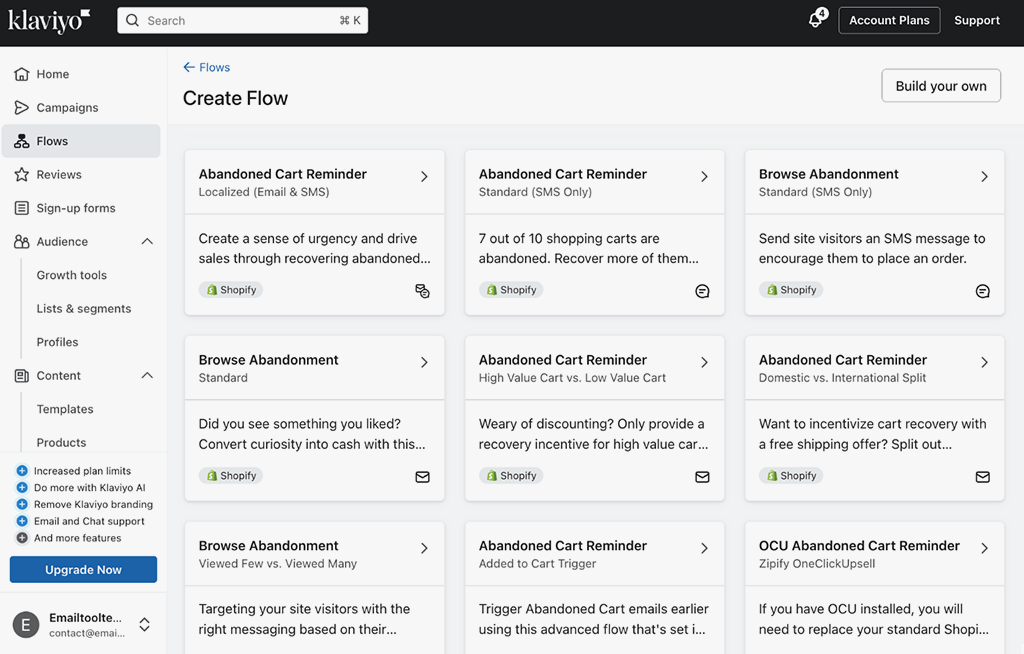
The platform’s flow builder makes it easy to create complex automation sequences with branching logic based on customer actions. This allows for highly personalized customer journeys that adapt in real-time to shopper behavior, significantly increasing conversion rates compared to static campaigns.
Free trial: Yes
Best for: Data-driven e-commerce marketers looking to maximize revenue through highly targeted campaigns. Particularly valuable for businesses with sufficient customer data to leverage predictive features and those seeking to optimize their email marketing ROI through rigorous testing and refinement.
How to Choose the Best Tools for Your E-Commerce Business
Selecting the right software stack for your e-commerce business isn’t a one-size-fits-all proposition — it should be a strategic decision based on your specific needs, growth stage, and operational model. Here’s a practical framework for making these critical choices:
Assess Your Business Stage and Core Needs
Startup Phase: If you’re just launching your e-commerce business, focus on establishing the foundations with minimal complexity:
- A user-friendly e-commerce platform like Shopify
- Basic email marketing through Mailchimp’s starter plan
- Planfix for core operational management and growing with your business
At this stage, prioritize tools that are easy to implement and won’t require significant technical resources. The goal is to create a functional system that allows you to start selling quickly while gathering the data you’ll need to make more sophisticated decisions later.
Growth Phase: As your business expands and order volume increases, operational efficiency becomes critical:
- Upgrade to more advanced inventory management through Zoho Inventory
- Implement more sophisticated marketing automation with Klaviyo
- Expand your use of Planfix with custom workflows for specialized processes
During growth, look for tools that eliminate bottlenecks in your operations. Identify the manual processes consuming most of your team’s time and prioritize automating those first. This is when integration between systems becomes particularly valuable.
Scaling Phase: At this stage, data-driven optimization and multi-channel management become priorities:
- Implement comprehensive analytics solutions that give visibility across channels
- Add specialized tools for customer support, loyalty, and retention
- Leverage Planfix’s advanced customization to create cross-functional workflows
Businesses at the scaling phase benefit most from unifying their data and processes. This is where Planfix’s ability to serve as a central operational hub delivers exceptional value, connecting specialized tools into a coherent ecosystem.
Build Around a Core System
Rather than treating each software category as separate, consider building your tech stack around a central platform that serves as your operational backbone. For many e-commerce businesses, Planfix can serve this role effectively, with specialized tools connecting to it for specific functions.
This “hub and spoke” approach offers several advantages:
- Reduced data silos and improved information flow
- Consistent user experience for your team
- Simplified training and onboarding
- More cohesive reporting and analytics
The ideal configuration often includes Planfix as your operational center, with 1-2 specialized tools for functions like e-commerce storefront (Shopify), advanced email marketing (Klaviyo), or complex inventory management (Zoho Inventory).
Consider Integration Capabilities Above All
Perhaps the single most important factor in building an effective e-commerce software ecosystem is how well your tools connect with each other. Even the most powerful platforms become problematic when they operate in isolation.
When evaluating any software, ask:
- Does it offer direct integration with your existing tools?
- Is there an API that allows for custom integration if needed?
- How much data can flow between systems automatically?
- Will integration require ongoing maintenance or developer resources?
Planfix excels in this area with its extensive integration capabilities, allowing it to serve as the connective tissue between specialized systems. This significantly reduces the manual data transfer and duplicate entry that often plague e-commerce operations.
Start Simple, Then Expand
A common pitfall is implementing too many complex systems simultaneously. Instead:
- Start with core functionality through platforms like Planfix and Shopify
- Establish stable processes and gather operational data
- Identify specific pain points or opportunities through actual usage
- Add specialized tools strategically to address those specific needs
This evolutionary approach reduces risk and ensures each addition to your tech stack addresses a genuine business need rather than creating unnecessary complexity.
Balance Immediate Needs with Future Growth
While it’s important to solve your current challenges, avoid solutions that will become limitations as you grow. Ask:
- Will this solution still work when we have 10x our current order volume?
- Can it handle expansion into new markets or sales channels?
- How easily can we migrate data if we need to change systems in the future?
Platforms with flexible architecture and strong customization capabilities, like Planfix, provide the adaptability needed for sustainable growth without forcing disruptive system changes down the road.
Building Your Optimal E-commerce Stack
Your e-commerce software stack is a strategic asset for business growth. Successful retailers create ecosystems with seamless data flow, automated tasks, and clear performance metrics.
Build around a core platform like Planfix with its CRM functionality, workflow automation, and integration capabilities. Connect it with specialized tools like Shopify or Klaviyo to create a cohesive system where components enhance each other.
Start with the essentials and expand based on actual needs as your business evolves. Consider Planfix as the cornerstone of your tech ecosystem for sustainable growth in the competitive digital marketplace.
FAQ
What types of software are essential for running an e-commerce business?
Essential e-commerce software includes a reliable e-commerce platform, inventory management systems, payment processing tools, customer relationship management (CRM) software, and marketing automation tools. Depending on your business size, you may also need accounting software, analytics tools, and shipping/fulfillment solutions.
How do I choose the right e-commerce platform for my business?
Select an e-commerce platform based on your business size, technical expertise, budget, and specific needs. Consider factors like ease of use, customization options, available integrations, mobile responsiveness, SEO capabilities, and scalability. For beginners, look for user-friendly platforms with drag-and-drop interfaces, while businesses requiring more customization might prefer open-source or developer-friendly solutions.
What security features should I look for in e-commerce software?
Prioritize software with robust security features, including PCI DSS compliance, SSL certification, secure payment gateways, two-factor authentication, regular security updates, data encryption, and fraud detection tools. Customer data protection should be a top priority, so ensure your software provides secure customer account management and privacy controls.
How can I integrate multiple software solutions for my e-commerce business?
Most modern e-commerce platforms offer integration capabilities through APIs, plugins, or app marketplaces. Look for software with pre-built integrations with your essential tools (payment processors, shipping services, marketing platforms, etc.). For custom integrations, consider middleware solutions or hire developers to create custom connections between your various systems.
What’s the difference between cloud-based and self-hosted e-commerce software?
Cloud-based solutions (SaaS) are hosted on the provider’s servers, requiring minimal technical expertise, offering automatic updates, and typically charging monthly subscription fees. Self-hosted options give you more control and customization but require you to manage hosting, security, and maintenance. Cloud-based solutions are generally easier to set up and maintain, while self-hosted platforms offer more flexibility and potentially lower long-term costs.

Comments 1
Beautiful article, Thank you!
Thanks for sharing the info, keep up the good work going…. I really enjoyed exploring