


Courier operations break down for the same reasons in almost every growing delivery company: dispatchers can’t see capacity in real time, routes are built manually, proof of delivery is inconsistent, and billing turns into reconciliation work. The right software for courier management fixes these issues by turning each delivery into a trackable workflow – from order intake to POD, exceptions, and invoicing.
Below is a practical way to choose a system that matches how your business actually runs (same-day, scheduled, B2B routes, multi-stop, returns, gig couriers, etc.), without paying for features you won’t use.
What Courier Management Software Must Do (Non‑Negotiables)
Dispatch and Real-time Visibility
At minimum, you need:
- A live dispatch board (unassigned → assigned → picked up → delivered → failed/returned).
- Courier availability, workload, and location tracking.
- Exception handling (recipient not available, damaged package, address issue) with standardized statuses.
Routing and Multi-stop Optimization
Good routing isn’t only “shortest path.” It must support:
- Multi-stop routes with time windows and service times.
- Capacity constraints (weight/volume/number of parcels).
- Re-optimization when reality changes (traffic, cancellations, delays).
Proof of Delivery (POD) and Compliance
POD is often where disputes and lost margin happen. Look for:
- Photo POD, signature capture, barcode/QR scanning.
- Timestamp + geolocation.
- Configurable rules (e.g., photo required for leave-at-door).
Customer Communication
Reduce inbound “Where is my order?” by providing:
- Automated ETA notifications (SMS/email/WhatsApp depending on region).
- Live tracking links.
- Branded status updates and delivery instructions.
Billing, COD, and Settlements
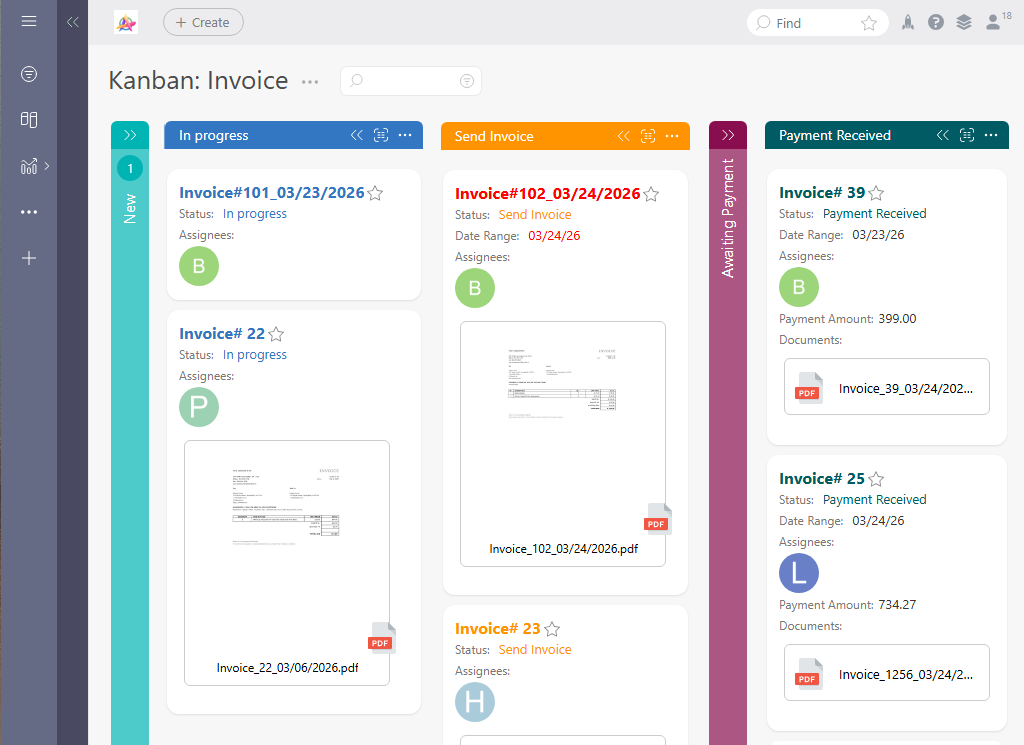
If you handle cash-on-delivery or courier payouts, you’ll want:
- COD tracking and reconciliation.
- Courier settlement logic (per stop, per mile, bonuses, penalties).
- Integration with accounting tools or exports your finance team can trust.
Integrations and Extensibility
Your courier tool must connect to:
- E-commerce platforms, marketplaces, OMS/WMS, POS (depending on vertical).
- Maps, telematics, messaging providers.
- Webhooks / API for custom workflows.
How to Evaluate Vendors: a Decision Checklist
Fit to Your Delivery Model
Write down your “dominant scenario”:
- On-demand (ASAP) vs scheduled routes;
- B2C vs B2B;
- Parcel vs food vs pharma vs documents;
- Returns-heavy vs mostly one-way.
Then check whether the product has those workflows natively or only via workarounds.
Control vs speed of rollout
Some tools are “ready-made” (quick to launch, less flexible). Others are workflow platforms (slower to configure, but scale better when you add services, hubs, SLAs, or new geographies). Choose based on how often your operations change.
Data Ownership and Reporting
Ask for:
- Delivery performance dashboards (on-time rate, attempts, failure reasons).
- Courier productivity metrics.
- Export access and API limits.
If you can’t measure exceptions and reasons, you can’t improve them.
Total Cost (Not Just Subscription)
Include:
- Per-driver fees, per-task fees, messaging costs.
- Onboarding, custom development, premium support.
- The cost of operational friction (manual dispatch time, disputes, failed deliveries).
Competitor Iandscape: Where Planfix and Others fit
Not every business needs the same type of system. The market typically splits into (1) delivery execution platforms and (2) broader workflow/operations platforms that can be configured into a courier OS.
Feature Comparison Table (High-level)
| Criteria | Planfix | Onfleet | Tookan | Bringg | Track-POD |
| Best for | Companies needing configurable workflows across dispatch, ops, support, and back office | Last-mile delivery execution with strong driver app + tracking | SMB delivery teams wanting a prebuilt dispatch + driver toolkit | Larger orgs with complex last-mile orchestration | POD-focused delivery operations with tracking + driver workflows |
| Core strength | Flexible process automation + task/work management (build your courier workflows) | Clean dispatch, live tracking, ETA, proof of delivery | Fast setup, multi-stop routes, basic automation | Enterprise integrations and orchestration layer | Strong POD, tracking, and delivery documentation |
| Workflow customization | High (no-code/low-code process logic) | Medium | Medium | High (enterprise) | Medium |
| Proof of delivery | Configurable (photos/files/checklists as required by process) | Strong (photo/signature) | Strong | Strong | Strong focus |
| Integrations / API | Strong (connect ops + CRM-like processes) | Strong | Good | Very strong (enterprise) | Good |
| Typical trade-off | Requires thoughtful configuration to match your operations | Less suited if you need broader internal workflows beyond delivery execution | Can become limiting for complex multi-department ops | Cost/ complexity; longer implementations | More POD-centric than end-to-end ops for some models |
How to interpret this table:
- Choose Planfix when courier delivery is not isolated-when you also need structured workflows for customer support, claims, returns, dispatch approvals, warehouse coordination, SLA timers, and cross-team accountability in one place.
- Choose Onfleet when you want a focused, delivery-first product with polished tracking and driver experience.
- Choose Tookan when you want a quicker SMB setup and standard courier workflows without heavy process design.
- Choose Bringg when you need enterprise orchestration across carriers, fleets, and complex integration landscapes.
- Choose Track-POD when POD and delivery documentation are the center of your operational risk and compliance needs.
A Practical Selection Process (Steps That Prevent Bad Purchases)
1) Map Your Delivery Workflow in 30 Minutes
List stages and exceptions:
- Order received → assigned → pickup → in transit → delivered/failed → return/closure.
Add 10–15 common exceptions and how they’re resolved.
2) Run a Paid Pilot with Real Drivers and Real Orders
A demo is not enough. Pilot criteria:
- 2–4 weeks.
- At least 200 deliveries.
- Measure: dispatch time per order, on-time rate, failed-attempt reasons, dispute rate, driver adoption.
3) Validate Reporting and Exports Early
Ask vendors to show:
- How failure reasons are coded.
- How POD is attached and searchable.
- How you export data for finance and customer claims.
4) Confirm Scaling Constraints
Before signing, confirm:
- Pricing at 10, 50, 200 drivers.
- API limits and overage costs.
- Multi-depot support, roles/permissions, audit logs.
FAQ
What is courier management software?
Courier management software is a system that manages dispatch, routing, driver coordination, proof of delivery, customer notifications, and delivery performance reporting in one workflow.
It helps delivery businesses reduce manual coordination, improve service reliability, and keep every shipment visible from assignment to completion.
What features matter most when choosing software for courier management?
The highest-impact features are real-time dispatch visibility, route optimization, reliable POD (photo/signature/GPS), automated customer updates, and integrations with your order sources and accounting tools.
Together, these features improve delivery accuracy, reduce delays, and give both operators and customers better control over the process.
Why consider Planfix for courier operations?
Planfix is a strong option when you need courier delivery to work as part of a broader operating system-connecting dispatch with internal workflows like customer support tickets, claims, returns, approvals, SLA tracking, and back-office coordination.
This makes it especially useful for companies that want to manage delivery not as a separate tool, but as part of end-to-end business operations.
Is route optimization always necessary?
If you run multi-stop routes, time windows, or high daily volume, optimization usually pays back quickly.
For very low volume or highly fixed routes, basic routing may be enough-but exception handling and POD still matter.
How do I know if a tool will be accepted by drivers?
Test the driver app in a pilot.
Adoption usually depends on speed, offline support, simple POD steps, and whether the app reduces calls/messages rather than adding admin work.
What’s the most common reason courier software implementations fail?
Trying to force a generic workflow onto a delivery business with unique constraints (time windows, returns, COD, multi-depot).
A short pilot with real exception scenarios prevents this.
