
Simple planner list: Difference between revisions
From Planfix
| Line 38: | Line 38: | ||
*Move the tasks to a [[List (Planner)|standard list]] to assign them for work. | *Move the tasks to a [[List (Planner)|standard list]] to assign them for work. | ||
https://s.pfx.so/pf/ | https://s.pfx.so/pf/vA/QvU7SL.gif | ||
The task adopts the specified attributes of the list to which it was moved. | The task adopts the specified attributes of the list to which it was moved. | ||
== Go To == | == Go To == | ||
*[[Types of planner lists]] | *[[Types of planner lists]] | ||
*[[Planner]] | *[[Planner]] | ||
Latest revision as of 09:35, 24 October 2025
A simple list in the Planner is a type of list intended for quickly recording tasks, notes, ideas, or activities that are not tied to anything specific.
- The difference between a simple list and a list with conditions
- How to create a simple list
- How to work with simple lists
The difference between a simple list and a list with conditions
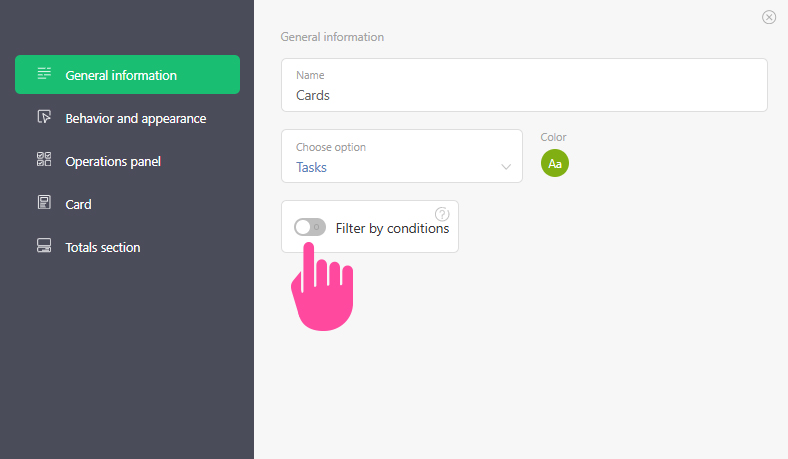
The main difference from standard lists in the planner is the lack of conditional filters. The toggle switch is inactive:
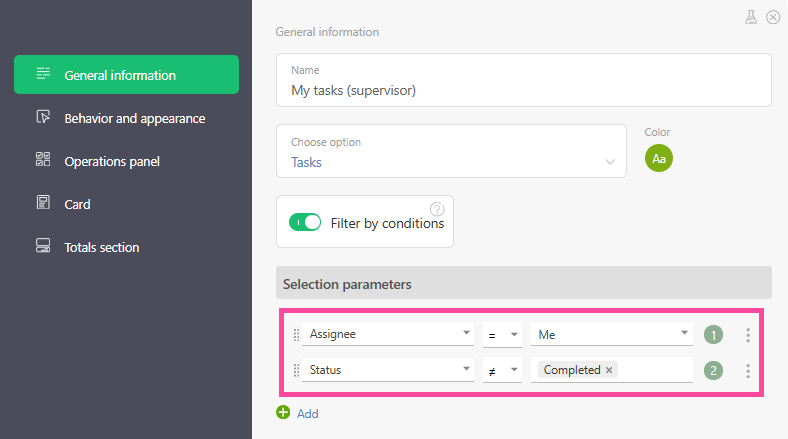
Standard lists (with conditional filters enabled) are a tool for more deliberate task management in Planfix:
How to create a simple list
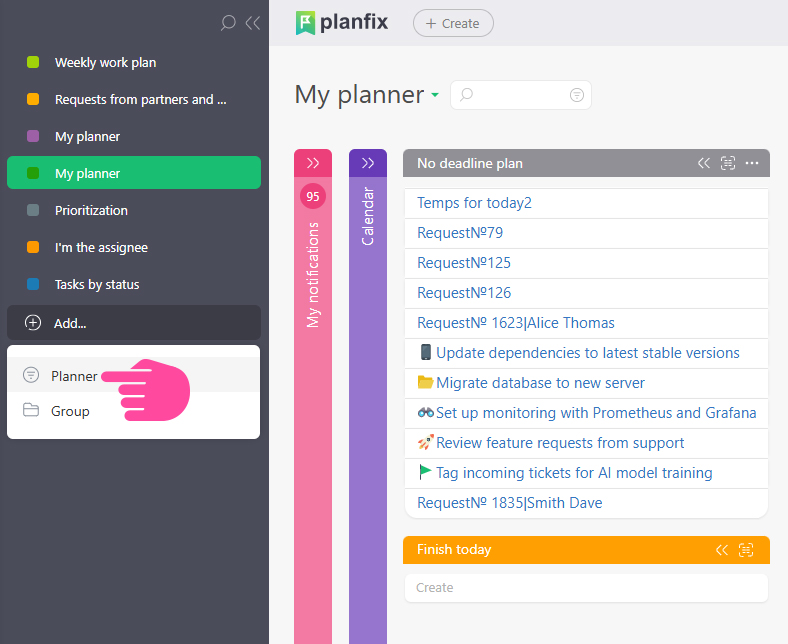
- Create a Planner for Kanban:
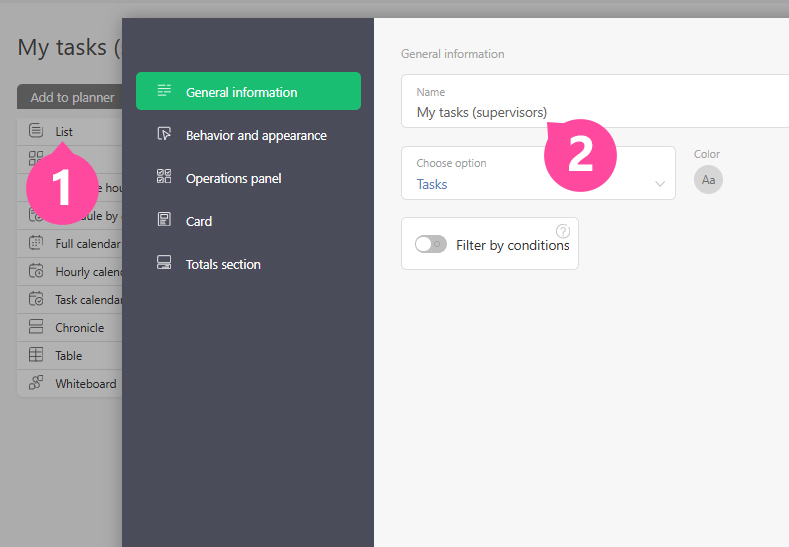
- Add a list::
- Add ideas or tasks to the list that need to be done:
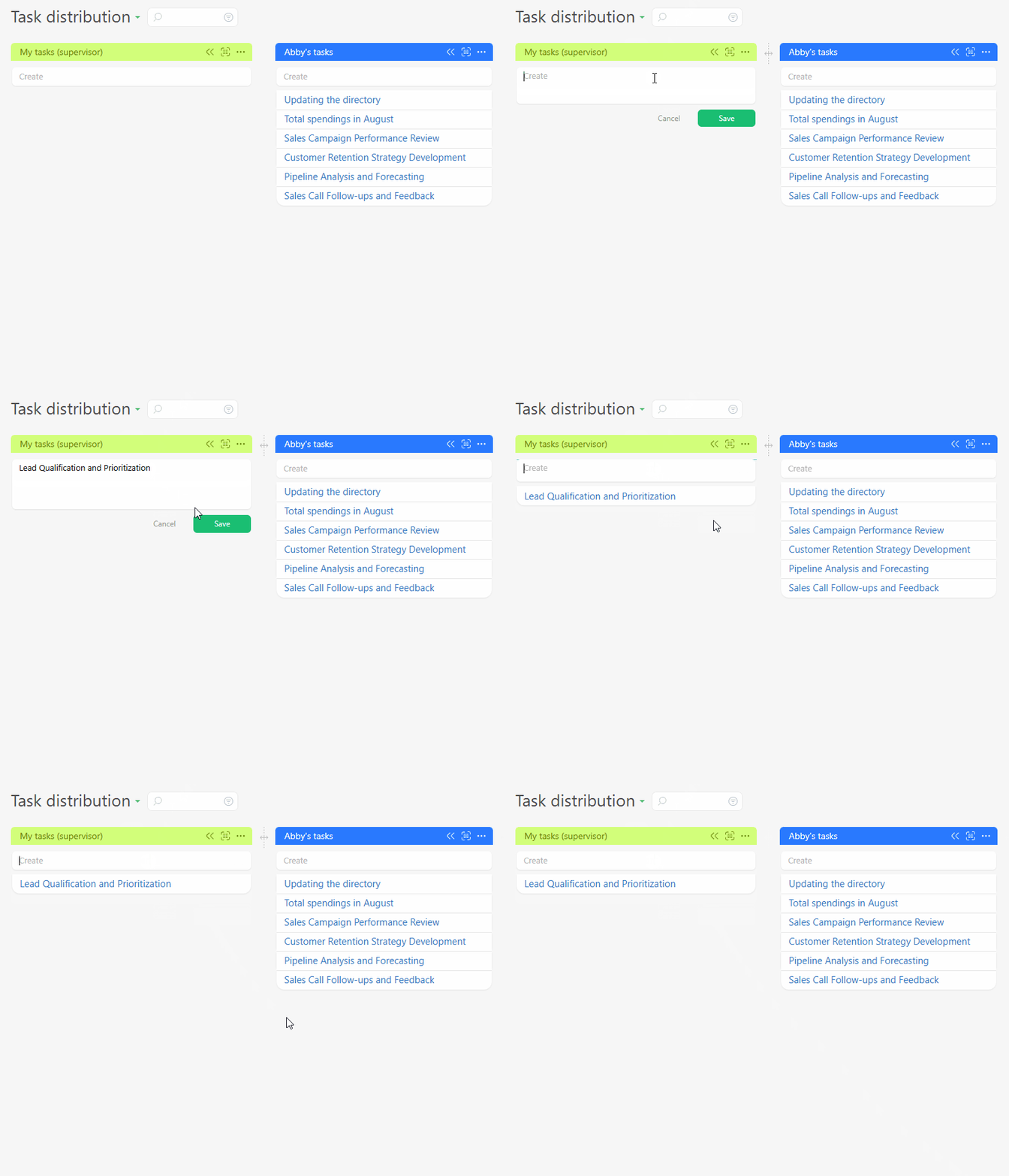
How to work with simple lists
The working algorithm is as follows:
- Add tasks to the simple list.
- Plan who will complete these tasks, when, and in what order.
- Move the tasks to a standard list to assign them for work.
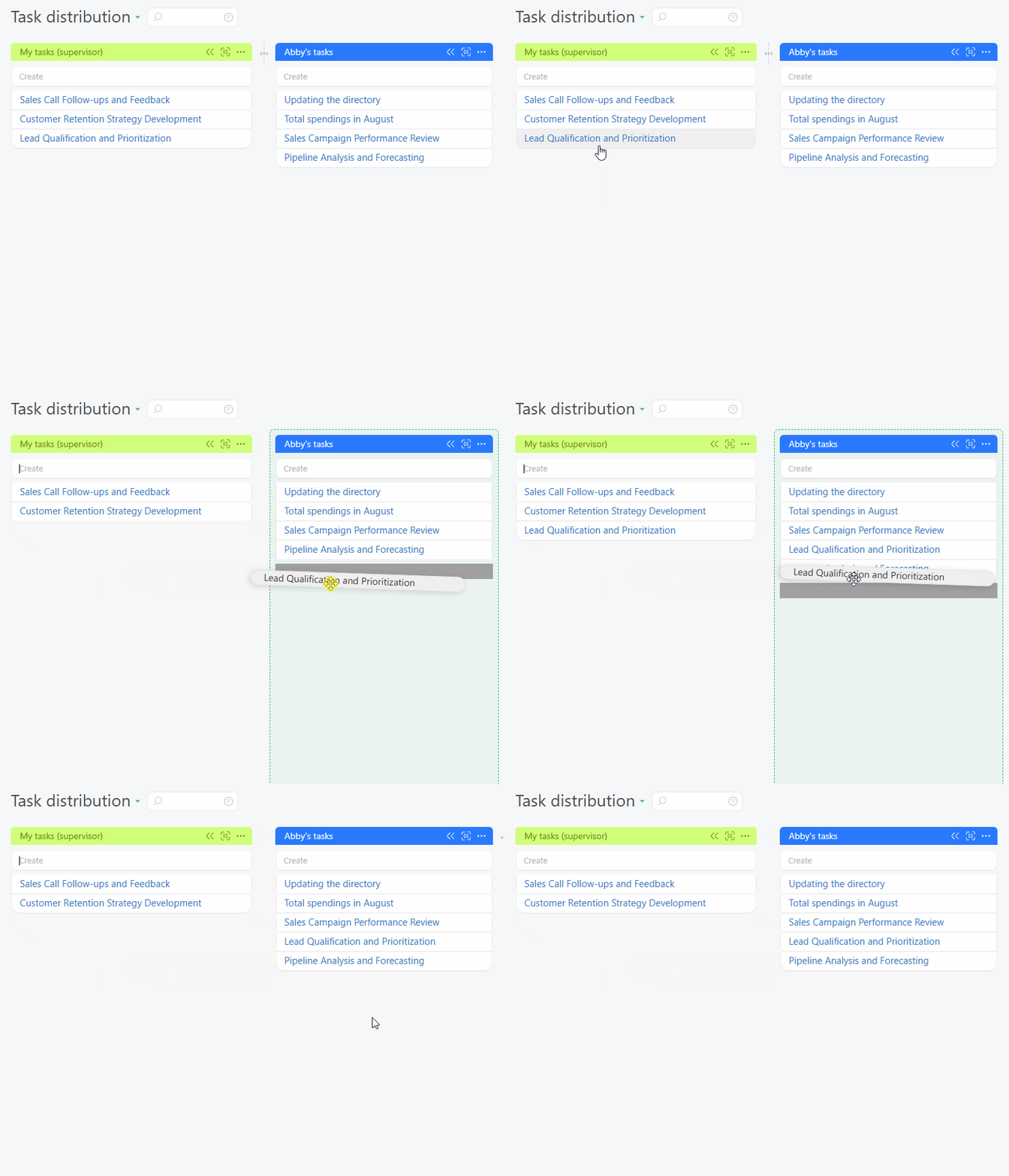
The task adopts the specified attributes of the list to which it was moved.